How do you get three stars on every level?
Stop chasing all three stars in one run: give each run one job (finish, collect, then the challenge), and combine them only once each job feels easy. Ten focused minutes a day beats an hour of angry retries, because tired thumbs repeat the same mistake.
Dear player stuck on two stars,
We build a level game, so we watch a lot of runs end one beacon short. The pattern is almost always the same. The player knows the level, rushes the start to save time, misses the first collectible, and then plays the rest of the run trying to make up for it. By the end they are surviving, not playing.
Most star systems hand out stars for three different skills. One star is for getting through. One is for thoroughness: coins, beacons, gems. One is a test: a time, a combo, a no-damage clear. Those skills fight each other. Collecting slows you down, speed makes you miss things, and a challenge asks you to ignore both. So stop asking one run to do all three. That's the whole method. The rest of this letter is how to practice it for a week.
What the three goals look like in RushOrb
In RushOrb the stars are called sparks. Every stage shows its three goals before you launch, which makes it a good place to practice the routine.
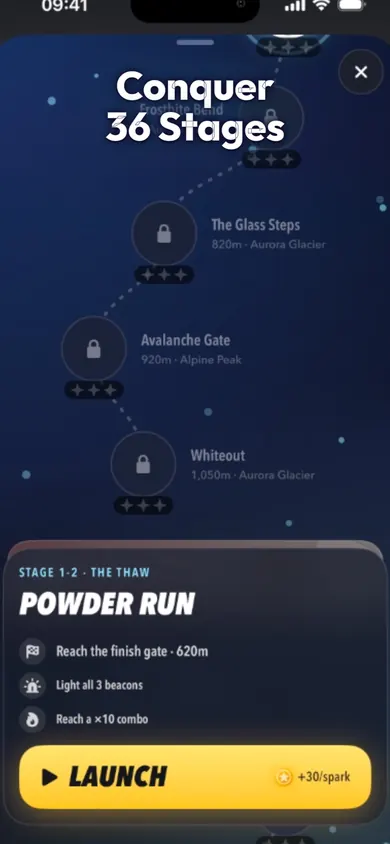
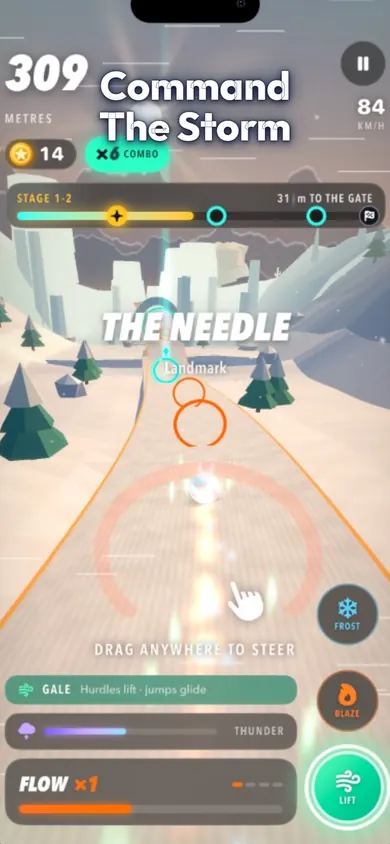
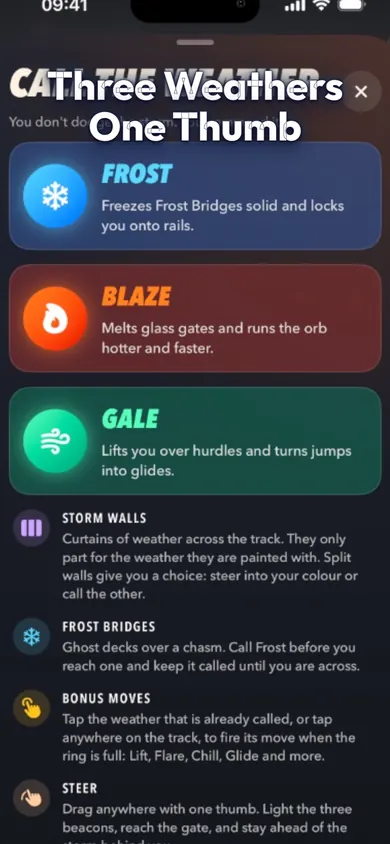
Challenges across the 36 stages include parting 6 Storm Walls, crossing 2 Frost Bridges and finishing without a revive. All 108 sparks complete the Atlas.
Honest limits of this routine
- It is slower on day one. You will "waste" runs on a single goal. That is the point, and it pays back by day four.
- Some third stars are pure reflex. If a challenge needs timing you do not have yet, no plan fixes that in a week. Park it and come back after ten new levels.
- We tested the idea on our own game. Score-based stars (beat 50,000 points) work differently: there, collecting and speed often point the same way.
- RushOrb has optional purchases: RushOrb Plus at $2.99 a month or $19.99 a year, and packs from $1.99. None of them earn sparks.
Who this is not for
Speedrunners and players who already three-star on the second try will find this slow. Same for anyone who enjoys the chaos of going for everything at once. If replaying a level makes you miserable, skip the third star entirely. In most level games, two stars still opens the next stage.
How the routine works, in 3 steps
- Read before you launch. Say the three goals out loud, or at least in your head. Most missed third stars are goals nobody read.
- One job per run. Finish run, collect run, challenge run. Each one teaches a different part of the map.
- Stop at three tries. Fatigue makes you worse, and a fresh try tomorrow is often the one that lands.
Your first week, day by day
- Day 1: Just finish. Pick three two-star levels. Finish each once. Ignore everything shiny.
- Day 2: Collect only. Same levels. Take every collectible, even if you finish slowly.
- Day 3: Read the challenge. Read the third goal before you launch. Run for that goal alone.
- Day 4: Combine two. Finish plus collect, in one run. No challenge yet.
- Day 5: Warm-up first. Two minutes of an easy level or endless mode, then attempts.
- Day 6: The full run. All three goals, three tries per level, then stop.
- Day 7: Move on. New levels. Note which old ones still need work.
Which star are you missing?
Tap the one that keeps escaping you.
Your fix appears here.
The design decision we made: RushOrb puts all three goals on the stage card, right above the Launch button, so you read them before every attempt. One limit worth knowing: it is English only and needs iOS 18 or later.
Practice on 36 stages
Ten minutes, one goal per run. See how many sparks you have by day seven.

Updated November 2026
Questions about three-star runs
Why do I keep getting two stars and never three?
Usually because you are doing three jobs at once: surviving, collecting and meeting a challenge. Each one pulls your attention a different way. Split them across runs and the third star stops being a coin flip.
Should I replay old levels or push forward?
Push forward until a level takes more than three tries to finish at all, then go back. New levels teach skills that make old three-star runs easier, and you get a break from the one that annoys you.
How many tries should I give one level?
Three focused tries per session. After that, accuracy usually drops. Close it, play a different stage, and come back tomorrow.
What are sparks in RushOrb?
RushOrb's version of stars. Each of the 36 stages gives up to three: one for reaching the finish gate, one for lighting every beacon and one for the stage's own challenge. There are 108 in total.
Can I buy my way to three sparks in RushOrb?
No. The listing says purchases are for style and bonus rewards, never for clearing stages. Sparks come only from how you play.
Does practicing in endless mode help?
Yes, for steering and timing. RushOrb's Endless mode and the Daily challenge let you practice steering and weather calls without a stage goal, so a few minutes there warms up your thumbs before a three-spark attempt.
Related
- RushOrb: the offline runner where you call the weatherRushOrb is a free 3D runner for iPhone with no ads and full offline play. Call Frost, Blaze or Gale to part storm walls across 36 stages.
- Daily challenge games like Wordle (arcade)Same seed for everyone, one fresh run a day. Play today's 1-minute storm stage, compare 4 daily modes, and see how RushOrb's Daily works.
- Games like Alto's Adventure, with weather you controlLove Alto's skies and storms? Compare Alto's Odyssey, The Lost City and RushOrb, a free runner where you call the weather. Prices checked Nov 2026.
- How to beat ice levels in gamesIce levels feel unfair because your input lands late. Pick what goes wrong, get one fix and a 3-run drill. Winter game tips, plus RushOrb's Frost.