Parents of early counters: pick what you see at home and get one small, sourced next step.
What does your child do right now?
Tap the situation closest to yours.
Free on iPhone · no ads, no purchases
Is it normal for a child to still count on fingers?
Yes: counting on fingers is a normal stage of learning maths, and the next step is not to ban fingers but to give children faster strategies, starting with counting on and pairs that make 10.K5 Learning (2025) puts it plainly: "Counting on fingers is not a bad habit." It flags a need for extra support only when fingers are still needed for very simple facts well past the early grades, when a child always counts from 1, or when maths brings frustration or avoidance.
The research picture is still being filled in. a 2020 review in Frontiers in Psychology suggests early finger-based strategies may be part of how children's sense of number develops, while noting the exact mechanisms are unclear. Either way, fingers are a tool to grow past, not a fault.
Fingers are a bridge to mental maths, so build the bridge rather than take it away.
What parents of finger counters ask
Is it bad if my child still counts on their fingers?
No. K5 Learning (2025) calls finger counting a normal stage of learning maths and says fingers help children link numbers to quantities. It suggests support only when a child relies on fingers for very simple facts well past the early grades, always counts from 1, or avoids maths.
Should I stop my child from using fingers?
K5 Learning advises against stopping abruptly, because it can raise anxiety and avoidance. Researchers are still studying how finger use and number skills connect; a 2020 review in Frontiers in Psychology describes early finger strategies as one possible route by which number sense develops.
How do I help my child move from fingers to mental maths?
Teach counting on from the larger number, then the pairs that make 10, then doubles. Short, playful practice works better than speed drills, according to K5 Learning.
What are number bonds to 10?
The pairs that make ten: 1 and 9, 2 and 8, 3 and 7, 4 and 6, 5 and 5. Once these are automatic, sums like 8 + 5 can be solved as 8 + 2 + 3.
Can a game replace practice with me?
No game replaces talking about numbers together. A puzzle like Number Beasts gives extra reps of make-ten thinking, and works best when you sit with your child for the first few stages.
Does Number Beasts cost anything?
No. The App Store listing says no ads, no accounts, no tracking and no in-app purchases, and it works offline.
Where Number Beasts fits: the make-ten step
We make Number Beasts: Bond Lab, a free puzzle game where the number you launch is the projectile. Hit a beast and make exactly 10 and it pops. It is built for the third situation above, a child who knows some pairs to 10 and needs many relaxed repetitions to make them automatic.
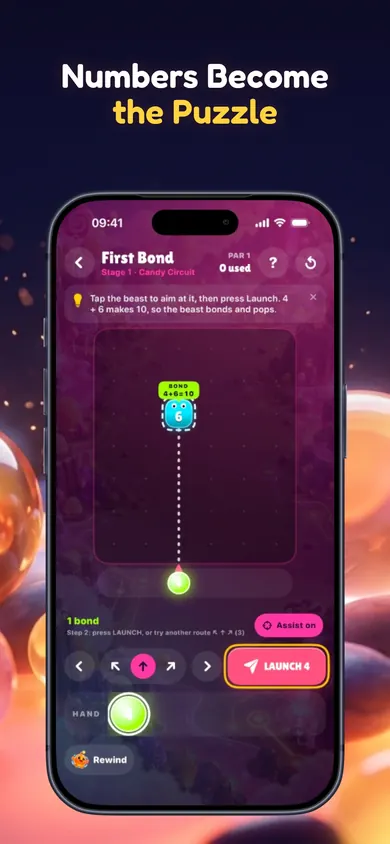
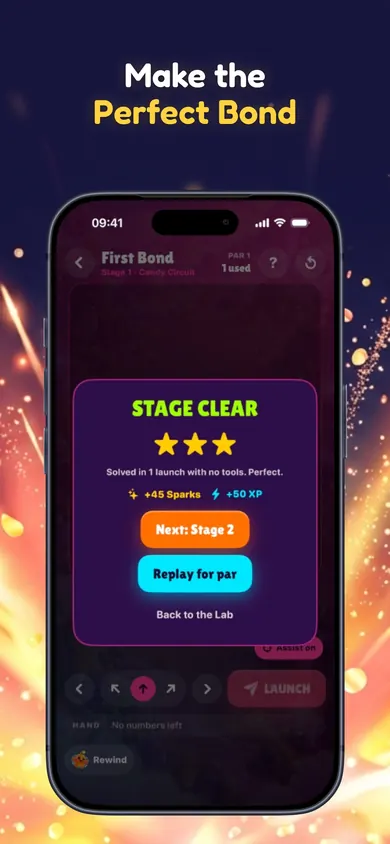
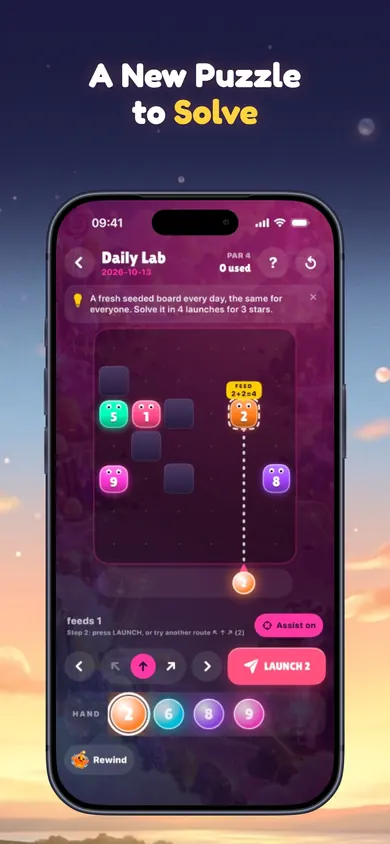
Stage 1: one beast, one bond, the sum shown before launch.Three stars for solving at par with no tools.Daily Lab: a fresh, solvable puzzle each day, offline.
Every launch asks one question: what makes ten from here?
Honest limits
It does not teach counting from scratch. A child who counts every finger from 1 should start with hands-on games first.
There is no parent report, no child profiles and no school-year levels. Progress is stars and badges on one device.
Short hint sentences need some reading; sit together for the early stages.
We make no claim that it raises test scores. It is practice that feels like a puzzle.
Who should pick something else: if your child needs a structured drill with tracking, a dedicated number bonds drill app with a parent area will serve you better.
How it works, in 3 steps
Tap a beast. The launcher lines up the shot. With aim assist on, the path and the exact sum appear first, such as BOND 4+6=10.
Launch. Exactly 10 pops the beast. Too small and the beast grows and now needs a smaller number. Too big and the leftover keeps flying: a 7 into a 5 sends a 2 on to the next beast.
Plan. Each of the 45 stages has a par. Clearing at par with no help earns three stars.
One design decision we made: helper tools exist (Bloop rewinds, Zappo nudges a number by one, Nimbus shows a winning move) but any tool caps the attempt at two stars. A stuck child can get unstuck without anyone saying "just count it".
The leftover rule quietly teaches the split behind 8 + 5 = 8 + 2 + 3.
A mini story: from fingers to "make ten first"
Picture a six-year-old asked for 8 + 5. Out come the fingers, all eight of them, then five more, then a recount. It works, slowly.
Now picture the same child after a week of a simple routine. Monday to Wednesday, two minutes of the UChicago STEM Education Breaking and Making 10 game: you show some fingers, they show how many more make ten. Thursday and Friday, five minutes of Number Beasts together, where the beast in front of them needs exactly 10.
The following week, 8 + 5 sounds different: "Eight needs two to make ten, and there's three left. Thirteen." The fingers may still twitch. That is fine. The strategy is the point.
Small, daily, playful: two minutes of make-ten beats twenty minutes of flash cards.
Open Number Beasts in the App Store
Free, offline, no ads, no purchases. Start with Candy Circuit stage 1 and play it together.
Best number bonds app for kids: 4 comparedA parent's guide to four iPhone and iPad number bonds apps: price, ads, sums covered, progress tracking. Three taps match one to your child.