 Is sudoku a math game?
Sudoku is a logic puzzle, not an arithmetic game: you never add or multiply, and the digits 1 to 9 could be swapped for any nine symbols without changing a single solve. It is mathematical in a deeper sense, though, which is why the answer people give online often depends on what they mean by "math".
If "math" means sums, sudoku has none. If "math" means reasoning about structure, sudoku has plenty. A completed grid is a Latin square with an extra box rule, and mathematicians have proved real results about it. The best known: a valid sudoku needs at least 17 clues. McGuire, Tugemann and Civario (2012) settled that with an exhaustive computer search showing no 16-clue sudoku exists.
One-line version: sudoku is maths without arithmetic.
How to tell if any puzzle is "math", in 3 steps
- Try the swap test. Replace every number with a colour or letter. If the puzzle still works, it is logic. Sudoku and Futoshiki pass; Kakuro breaks instantly.
- Read the clues for operations. A clue like "17" over a run of cells, or "12+" in a cage, means you will be adding. A clue that just says "3" for "three bridges" means counting.
- Notice what you write in the margin. Candidate digits mean elimination. Running totals mean arithmetic. Most players find out within one puzzle.
The quiz above uses exactly these three steps, which is why Hashi and Nonograms land in the middle: the numbers are counts, not sums to compute.
Why the question matters to people who avoid numbers
Plenty of people steer clear of anything with digits on it after a rough time with school maths, and sudoku often surprises them. Knowing it is pure logic is useful both ways. If you like sudoku but not sums, you can keep enjoying logic puzzles without guilt. If you want a puzzle that quietly gets you adding again, pick one where the numbers really are numbers.
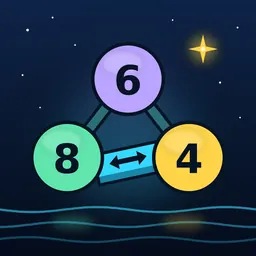
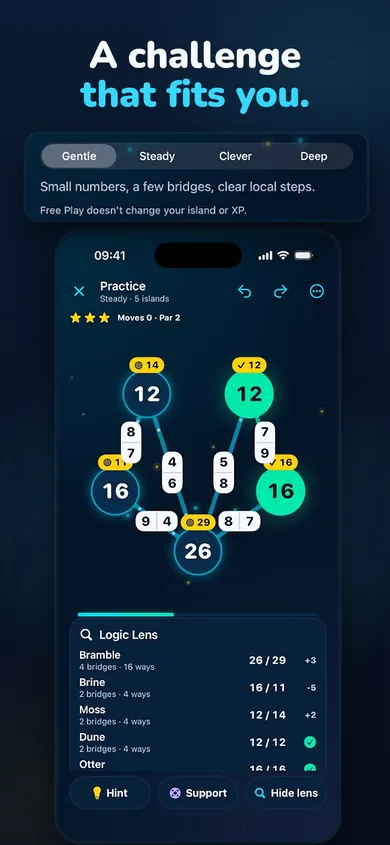
That second group is who we built Sumbriska for. Each island shows a target. Each bridge carries two numbers, one for each end. Tap a bridge to flip it and the two numbers trade islands, so both totals change at once. The board is solved when every island adds up exactly. The sums are small at first, and hints, Undo and step explanations never cost XP.

Honest limits
- Sumbriska is a game. We do not claim it improves maths grades or any other skill outside the game.
- Free: regions 1 and 2, the Daily board, The Deep and the timed Harbor Run. The Voyage Pass ($4.99 a month or $29.99 a year, no free trial) adds regions 3 to 6, side boards, Gale Run and the 3-4 ring workshop.
- iPhone only. It works fully offline, with no account and no ads.
A design decision we argued about: hints never cost anything. A sum puzzle that punishes you for asking for help would push exactly the wrong people away.
Who should stick with sudoku
If you love sudoku precisely because it has no arithmetic, stay there, or try Futoshiki for a fresh logic rule. If you want long sessions of competitive speed solving, a dedicated sudoku app with timed leaderboards suits you better. Sumbriska is for people who want small, calm sums inside a puzzle.
What kind of math each puzzle hides
| Puzzle | Arithmetic? | The maths underneath |
|---|---|---|
| Sudoku | None | Latin squares and elimination |
| Futoshiki | None | Ordering: bigger and smaller |
| Nonogram | Counting | Fitting runs into a line |
| Hashi | Counting | Connecting a network |
| Kakuro | Sums | Splitting a total into unique digits |
| Sumbriska | Sums | Balancing totals where every move changes two |
Sudoku and math: more questions
Is sudoku math or logic?
Logic, if by math you mean arithmetic. You never add, subtract or multiply; the digits are labels. It is still mathematical in the wider sense: a finished grid is a special kind of Latin square, and questions about sudoku are studied by mathematicians.
Do you need to be good at math to play sudoku?
No. You need to notice which symbol is missing from a row, column or box. People who dislike sums often enjoy sudoku for exactly that reason.
Does sudoku improve math skills?
There is no good evidence that sudoku improves arithmetic. It practises careful elimination, which is a different thing. If you want to practise sums inside a puzzle, choose one built on sums.
What is the minimum number of clues in a sudoku?
Seventeen. McGuire, Tugemann and Civario (2012) ran an exhaustive computer search and found no valid sudoku with only 16 clues.
Which number puzzles actually use arithmetic?
Kakuro, Killer Sudoku and KenKen use sums (KenKen adds other operations too). Sumbriska uses sums: every island has a target and every bridge sends one of two numbers to it.
Is Sumbriska harder than sudoku?
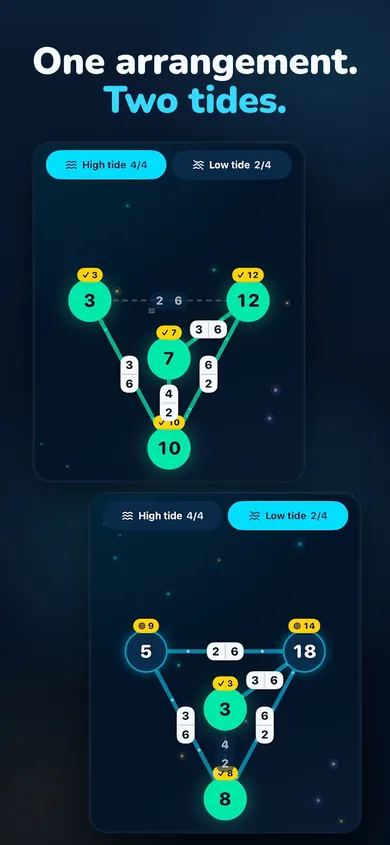
It asks for a different skill rather than more of the same one. Early boards use small numbers; later regions and Two Tides boards ask you to plan several flips ahead.
Is Sumbriska free?
The free download includes regions 1 and 2, the Daily board, The Deep and Harbor Run, with no ads. The optional Voyage Pass ($4.99 a month or $29.99 a year, no free trial) adds regions 3 to 6 and more.
Try a sum puzzle tonight
Flip your first bridge in under a minute. Try it tonight with the free download on the App Store.

Updated November 2026
Related
- Easier number puzzles than sudoku: rank what bugs youSudoku too hard? Rank what bugs you about it and get an easier number puzzle to start with, plus a plain chart of five beginner options.
- Sumbriska: the number bridge puzzleFlip bridges until every island hits its exact sum. A calm number bridge puzzle for iPhone: no ads, offline, two regions free.
- What to play after sudoku: a first-week guide to SumbriskaBored of sudoku? Sort which sudoku habits carry over, then follow a 7-day first week in Sumbriska, a number bridge puzzle. Free on iPhone, no ads.
- Free bridges puzzle apps with no ads, comparedFour bridges (Hashi) puzzle apps for iPhone checked against their App Store listings: price, ads, what is free and what costs extra.