For sudoku fans ready for a new number puzzle: sort your habits, then follow a 7-day start.
Drag (or use the arrows) to rank these sudoku habits: most useful in a bridge puzzle on top.
Guess, then backtrack
Think in sums, like killer sudoku cages
Start with the most constrained spot
Pencil in every candidate
Remember one move touches more than one place
Work out what's missing, not what's there
Free on iPhone · no ads · offline
What number puzzle should I try after sudoku?
Try a puzzle that keeps sudoku's pure logic but changes the move itself; in Sumbriska, a number bridge puzzle, you flip bridges so every island lands on its exact sum. We make Sumbriska. This page is a first-week guide for people arriving from sudoku: what carries over, what's new, and a day-by-day plan using only the free regions. Updated November 2026.
How Sumbriska works in 3 steps (for sudoku players)
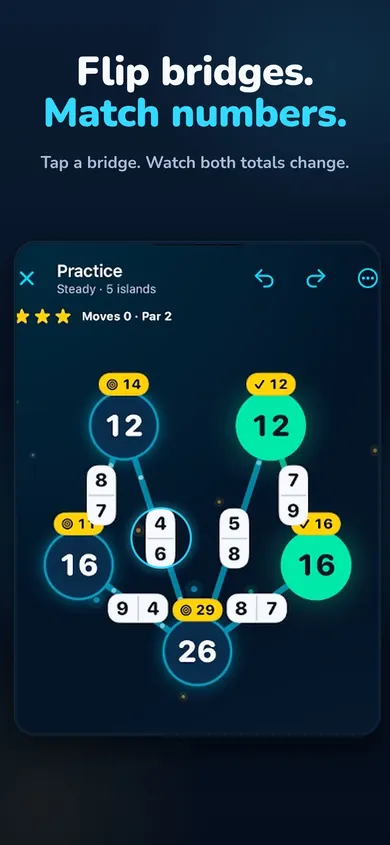
Read the island. The yellow tag is its target; the big number is its current total, the sum of the bridge ends touching it. Think of the tag as a cage sum that's already printed for you.
Flip a bridge. Each bridge holds two numbers, one per end. A flip swaps them, so one island rises and its neighbour falls by the same amount.
Match every island. When all totals hit their targets the board is solved. Moves are counted against a par, and three stars mark a tidy route.
Sudoku asks "what goes here?"; Sumbriska asks "which way does this face?"
A mini story: the sudoku solver's first board
A longtime newspaper sudoku solver opens a Steady practice board: five islands, par 2. Habit says pencil marks, so she starts listing what each island could be. It doesn't help much; each bridge only faces two ways. Then she does what she'd do in a hard sudoku: she looks for the tightest spot. The bottom island is 3 off its target and touches four bridges. Instead of listing candidates she asks which flips swing it by exactly the right amount, and which of those don't wreck a neighbour that already matches. Flip 9|4 and the left island drops 5 to its target while the bottom gains 5; flip 4|6 and the top-left gains 2 while the bottom gives 2 back. Two flips, par, solved.
By day four she has stopped pencilling entirely and is reading the tags as differences. That's the real switch: from candidates to swings.
Your first week in Sumbriska, screen by screen
Store screenshots. The numbered dots match each day's notes. Everything here is in the free download.
123
Days 1 and 2 · Learn the flip
Practice boards, Gentle then Steady
Moves and par. Par is the tidiest number of flips. Ignore it on day one.
The tag. The small yellow tag is the island's target; the big number in the circle is what it has now. A check mark means matched.
A bridge. Tap it and both numbers swap ends. Watch both islands change.
123
Days 3 and 4 · Turn up the difficulty
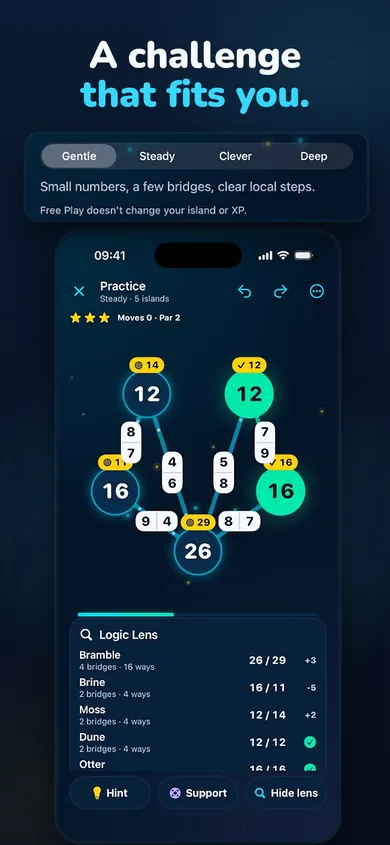
Steady to Clever, with the Logic Lens
Gentle, Steady, Clever, Deep. Gentle is small numbers and clear local steps. Sudoku regulars can usually start at Steady.
Logic Lens. Lists each island's bridges, how many ways it can be set, and its gap to target (+3, -5). This is your pencil-mark replacement.
Hint. Hints, Undo and step explanations never cost XP. Use them to learn, not to feel bad.
123
Day 5 · Start a region
Lantern Harbor and Orchard Isles
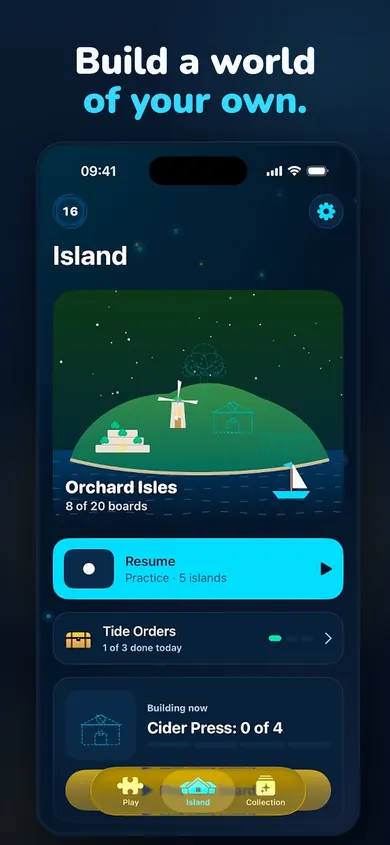
Region boards. Regions 1 and 2 are free. Solved boards build your island.
Resume. Picks up exactly where you left off.
Building now. Each board adds to a building, like the Cider Press here.
123
Days 6 and 7 · Make it daily
The Daily board, The Deep and Tide Orders
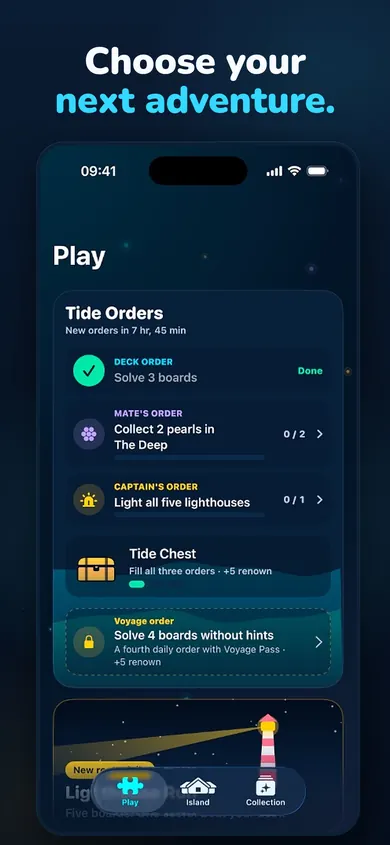
Tide Orders. Small daily goals, like solving three boards.
The Deep. An endless dive through boards for a long evening. Harbor Run is the timed test of pace.
Voyage order. A fourth daily order with a lock icon is part of the optional Voyage Pass. You can ignore it.
Your sorting result: which sudoku habits carry over
Here's the order we'd put them in, with why. Your own order is checked against it in the box at the top.
Start with the most constrained spotCarries over best. An island with a single bridge has only two possible totals, so that bridge is often decided before you think.
Remember one move touches more than one placeIn sudoku a digit hits a row, column and box. In Sumbriska one flip changes two islands, always in opposite directions.
Work out what's missing, not what's thereTarget minus current total tells you the swing you need. A 4|6 bridge swings each end by 2.
Think in sums, like killer sudoku cagesUseful, but every island here is already a sum. The trick is which bridge end feeds it.
Pencil in every candidateLess useful. Each bridge only faces two ways, so there's little to pencil.
Guess, then backtrackUndo is free, so guessing won't cost you. But logic usually gets you to par faster.
One design decision we made: hints never cost XP. Sudoku apps often make you feel you cheated; we'd rather you see the step, understand it, and solve the next one alone.
Who Sumbriska is not for
Grid purists. If the joy is a 9x9 grid and pencil marks, stay with sudoku, or try kakuro or killer sudoku, which keep the grid.
People who want everything for one price. Regions 3 to 6 and the side boards need the Voyage Pass subscription. There's no one-time purchase and no free trial.
Players who dislike arithmetic. Every move is an addition or subtraction. If you prefer symbols, a non-numeric logic game will suit you more.
Android users. Sumbriska is iPhone only.
Questions from sudoku players
What number puzzle should I try after sudoku?
Pick one that keeps the pure logic but changes the move. Sumbriska swaps filling cells for flipping bridges: each island has a target sum, each bridge carries two numbers, and one flip changes two islands at once.
Is Sumbriska harder than sudoku?
Different rather than harder. Gentle boards use small numbers and a few bridges; Clever and Deep boards ask you to think several flips ahead. Two Tides boards make one layout satisfy two sets of targets.
Do sudoku skills help in Sumbriska?
Some do. Starting from the most constrained spot and remembering that one move touches more than one place both carry over. Pencil-marking candidates matters less, because each bridge has only two ways to face.
Is Sumbriska free?
The free download includes regions 1 and 2, the Daily board, The Deep and Harbor Run, with no ads. The optional Voyage Pass ($4.99 a month or $29.99 a year, no free trial) adds regions 3 to 6, side boards, Gale Run, the 3-4 ring workshop and premium cosmetics.
Do hints cost anything?
No. Hints, Undo and step explanations never cost XP.
Does it work offline?
Yes, fully offline, with no account. The listing says no data is collected.
Make it a habit with Number Puzzles
Day one is a Gentle practice board. Day seven is the Daily board with your coffee, just like the newspaper sudoku. Make it a habit with Number Puzzles, free.
Sumbriska: the number bridge puzzleFlip bridges until every island hits its exact sum. A calm number bridge puzzle for iPhone: no ads, offline, two regions free.
 For sudoku players, week one