Dear parent,
You probably found this page the evening it happened. Homework went sideways, a pencil got put down a bit too hard, and then the sentence: I'm just bad at math. We make a math puzzle game, so read us with that in mind. But most of this letter is not about our game.
What do you say when your child says they're bad at math?
Agree with the feeling, not the label: say that this feels hard right now, point to one thing your child can do today that they could not do last month, and give them practice where mistakes are cheap and nothing is timed. The label matters because of what it leads to. In a 2016 review in Frontiers in Psychology by Dowker, Sarkar and Looi, the authors note that math anxiety can overload working memory during math tasks and that anxious people tend to avoid math, which means less practice, which makes the next worksheet harder. Breaking that loop is the whole job.
Jo Boaler's Fluency Without Fear (YouCubed, 2015) goes further and argues that timed tests are a common starting point for that anxiety. You do not have to agree with every line of it to notice the practical point: a child who feels slow should not be practising against a clock.
Name the feeling, show the progress, take away the clock.
Honest limits
- A game will not fix a belief on its own. What you say at the table matters more than any app, ours included.
- Number Beasts practises one thing well: making 10 and carrying the rest. It is not a full curriculum.
- If the feeling lasts for weeks, shows up as stomach aches or flat refusal, talk to the teacher. This is general information, not a diagnosis.
- iPhone only, iOS 18 or later.
The 20-second puzzle above, explained
The beasts show 7, 4 and 9. Each pops at exactly 10, so they need 3, 6 and 1. Launch a 10 and it pops the first beast with 3, carries 7, pops the second with 6, carries 1, and pops the third. One launch, three pops. Most children try 3 first, because 7 needs 3. That is not a mistake; it is the first bond, and the preview shows it before anything happens.
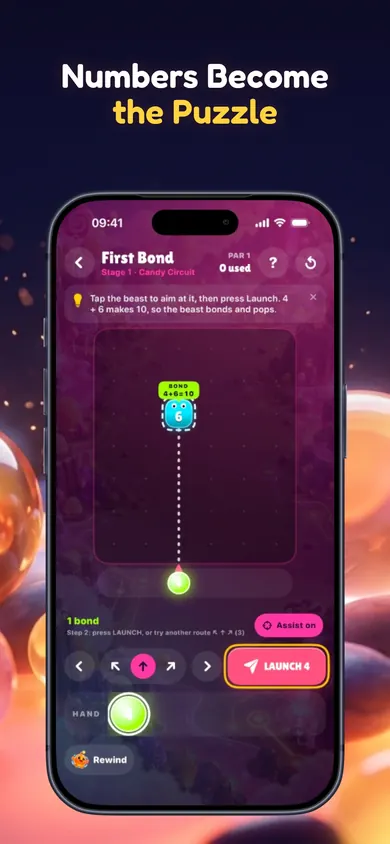
That is the design decision we care most about: in Number Beasts nothing moves until your child presses Launch, and aim assist shows the exact sum (BOND 4+6=10) beforehand. A child who says they are bad at math gets to be right before they act. Turn the preview off later, when they ask for it.
Right before they act: that is what an untimed preview buys.
A mini story: Thursday, 7:15 p.m.
There was a timed quiz at school today. Twenty sums, two minutes, and your daughter finished eleven. At dinner she says she is the worst in the class. You do not argue. You ask which ones she got right. Mostly the ones that made ten, she says.
After dinner you hand her the phone with one Candy Circuit stage open. The beast shows 6. She knows it needs 4. The preview agrees: BOND 4+6=10. She launches, it pops, and she plays four more stages without being asked. Nobody mentions the quiz. On Saturday she asks what happens if you launch a 9 at the 6. It carries the 5, she tells you, before you can answer.
She was not bad at math on Thursday; she was slow under a clock.
Three kinds of practice, compared
Timed drill apps
Speed under a clock
Good for children who already feel confident and enjoy racing. Hard on a child who feels slow.
Worksheets
What school sends home
Clear and familiar, but every mistake is visible in pencil and there is no picture of why.
Number Beasts
Turn-based puzzle
No clock, sum shown before launch, mistakes cost a launch, not a grade. Free, no ads, no purchases.
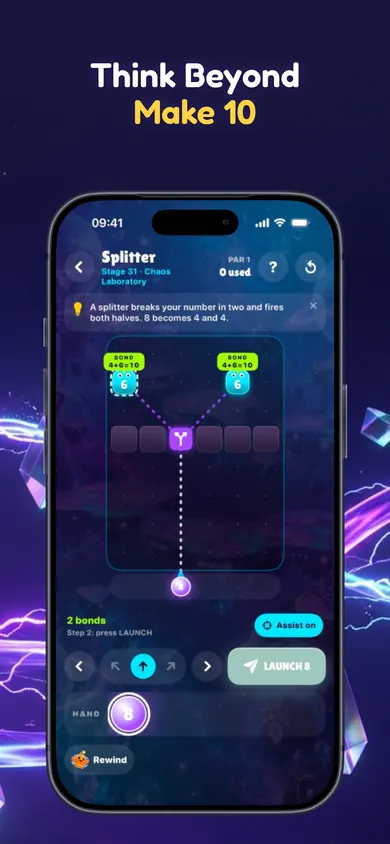
Proof from the App Store screenshots
Who this is not for
- Children who are not yet sure what pairs make 10. Fingers, beads and a ten frame come first.
- Children whose struggle is reading the question rather than the numbers. A puzzle with few words will not show you that.
- Families looking for lessons and progress reports. A curriculum app or the school's own platform fits better.
Questions parents ask
Should I tell my child they are good at math?
Praise they can check works better than a verdict. Point to something specific they could not do last month and can do now. A blanket 'you're great at math' tends to collapse at the next hard worksheet.
Can math anxiety start in young children?
Yes. Jo Boaler's Fluency Without Fear (YouCubed, 2015) cites research recording math anxiety in children as young as five. The 2016 Dowker review notes that anxious people tend to avoid math, which means less practice.
Are timed math drills bad?
They are not bad for everyone, but they are a poor fit for a child who already feels slow. Boaler argues that timed tests are a common starting point for math anxiety. Try untimed practice first and add a clock later, if ever.
Is Number Beasts timed?
The puzzle stages are turn-based, so nothing happens until your child presses Launch. The separate arcade mode is real-time; skip it for a child who freezes under pressure.
Is Number Beasts free?
Yes. The listing says no ads, no accounts, no tracking and no in-app purchases, and it works offline.
When should I talk to the teacher?
If the feeling lasts for weeks, shows up as stomach aches or refusal, or your child seems stuck on basics their class has moved past, ask the teacher what they see. This page is general information, not a diagnosis.
Play free on iPhone
One stage tonight, no clock, the sum shown first. Then ask which beast was hardest.

Number Beasts: Bond Lab on the App Store
Warmly,
the Honest Little Apps team
Related
- Number Beasts: the make-ten number bond puzzleLaunch a number, make 10, carry the rest. A turn-based number bonds puzzle for iPhone with 45 stages. No ads, no purchases, offline.
- What to do when your child still counts on fingersFinger counting is a normal stage. Pick your child's situation for the next step to try, from counting on to make-ten games, with sources.
- The make a ten strategy, explained for parentsPuzzled by make-a-ten homework? Tap through 8 + 5 in three moves, then follow a seven-night plan with a free make-ten puzzle game.
- Math games instead of worksheets: which swap fitsWhen worksheets end in tears: compare a card game, a shorter sheet and a make-ten puzzle app, then take a 3-question quiz to pick one.